



CHAPTER 01
Transition
She had paid them for him, and it had taken less than a breath.
The GreatRevolt
Arrival
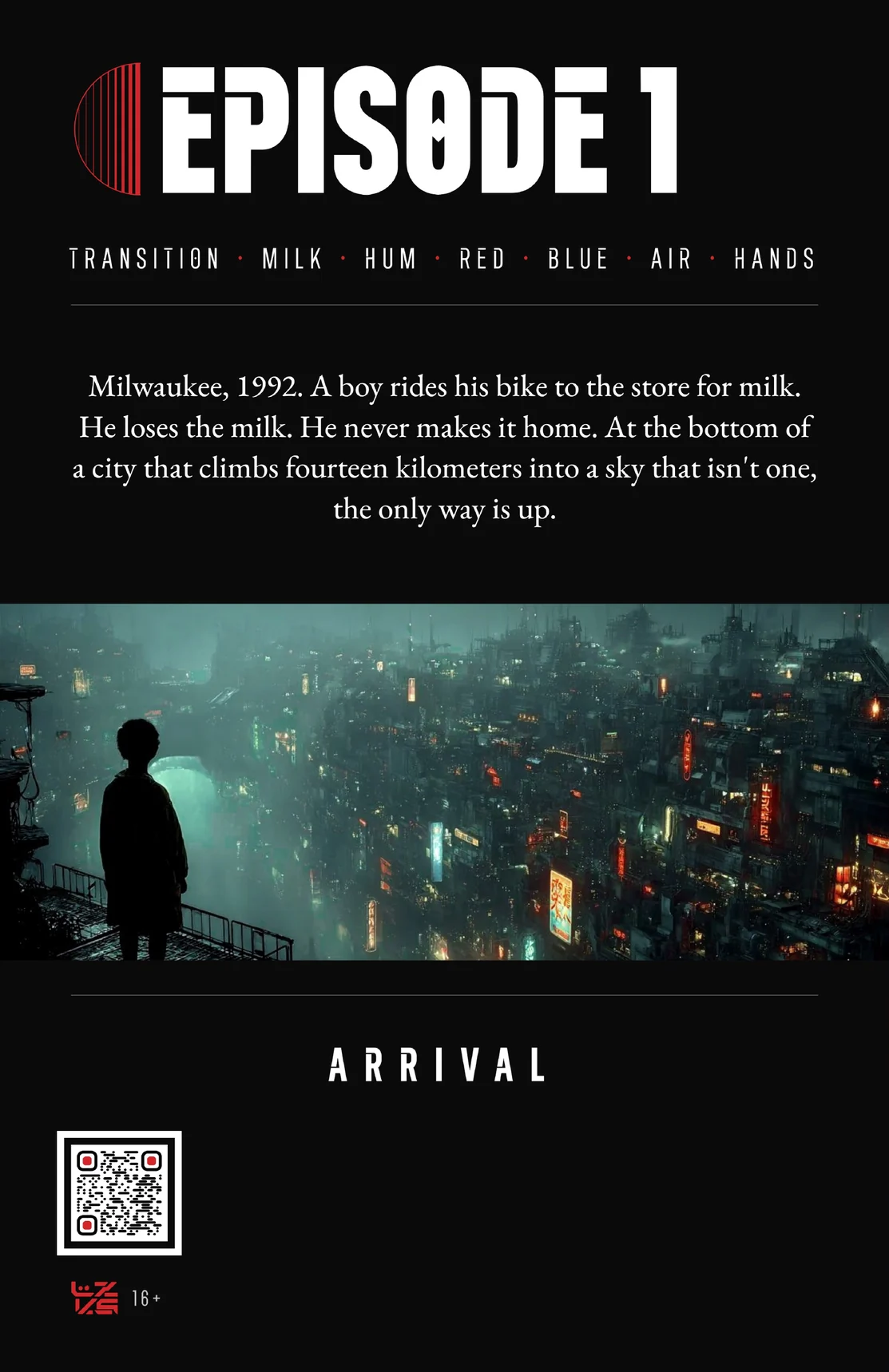
Milwaukee, 1992.
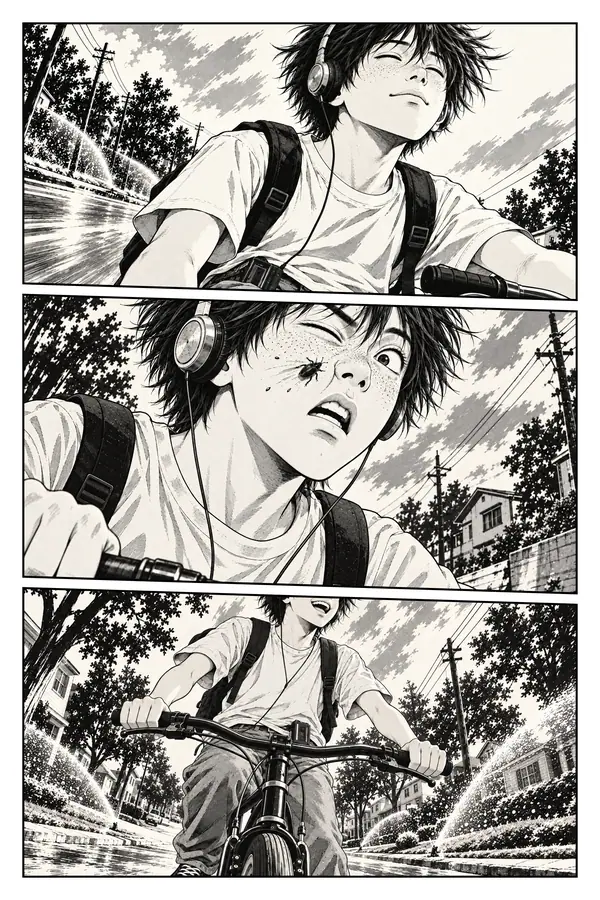
A boy rides his bike to the store for milk.
He loses the milk.
He never makes it home.
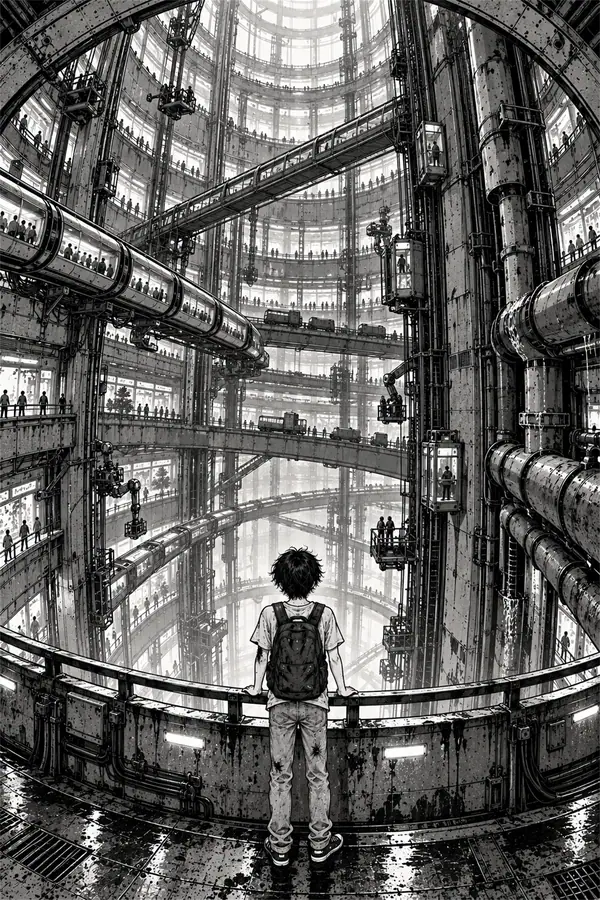
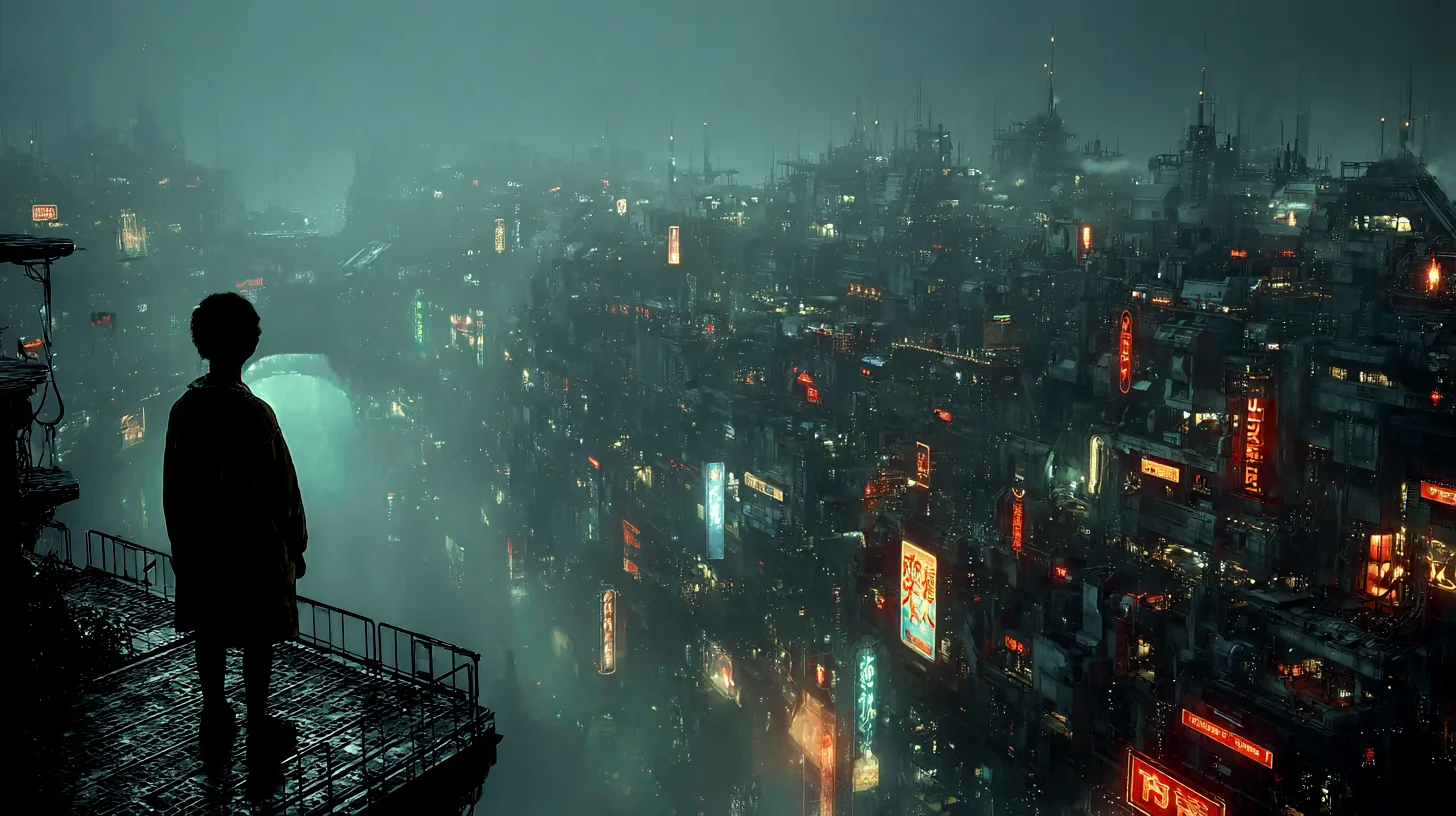
At the bottom of a city fourteen kilometers tall,
he can’t read a sign or prove he exists.
The onlyway is up.EPISODE 01 · ARRIVAL
The city is stacked.So is the anger.
She had paid them for him, and it had taken less than a breath.

The whole morning felt like it had been left open just for him.

It just lay there under the afternoon, one long flat note held down at the bottom of the air.
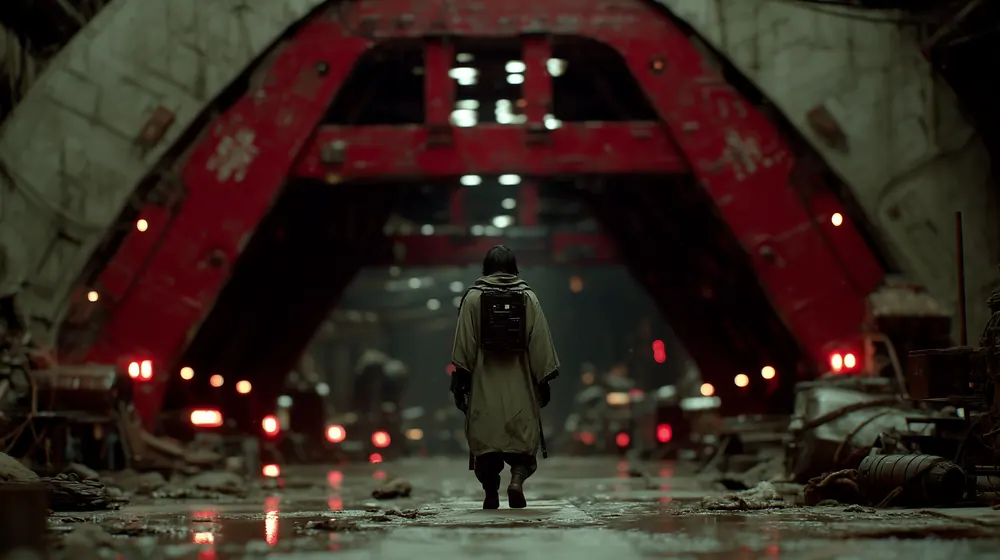
Far down ahead of him, a red light was growing.

He looked for a top to all of it and found more of it.
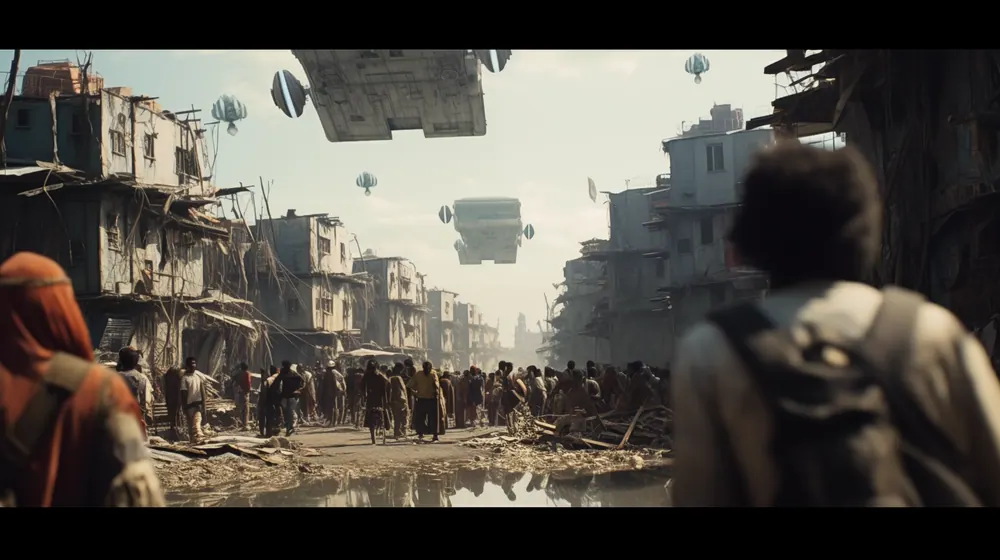
The crowd stopped where it was, packed shoulder to shoulder along the edge of the bare floor, and it stared.
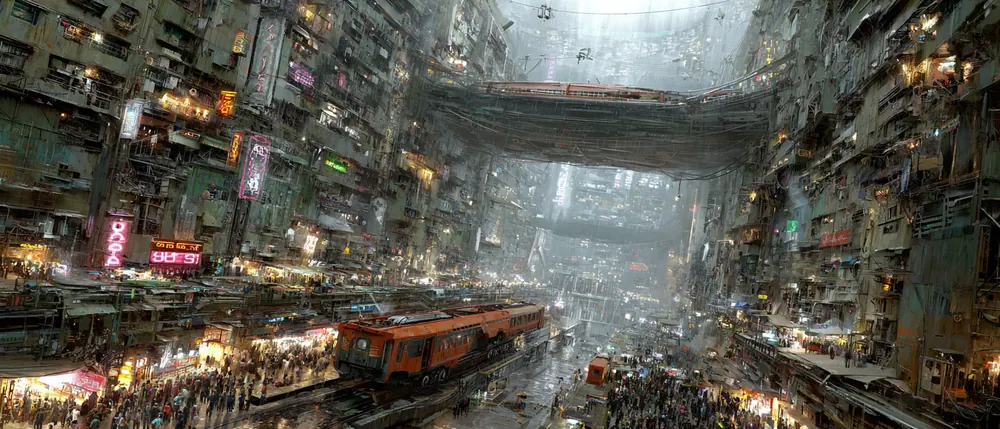
People lived in there, he thought, in every one of those windows, down to the bottom ones.
Morning came up blue.
The deep blue that had pressed on the window all night thinned to a paler, brighter blue, and the kitchen filled with it. The light alone would not have woken her. The panel did, small and pale, opening low in her sight the moment rest ended, telling her the cycle had turned and work had come. That was the Wakāri, the chip behind her ear and the screen of light it threw across whatever she looked at. She cleared it with a glance and got up. She was thin in the close-cut work layers she wore to her shift, the line of light down one seam long dead, her hair pulled back hard, the skin under her eyes dark from three nights without sleep.
The children were already at the table. The boy bent over his bowl, eating fast, the gray morning ration that came as a dry brick and cooked down to something soft and almost without taste. His sister sat across from him with her own bowl going cold, reading aloud off her Wakāri, her eyes tracking up the air in front of her. Some children’s story about a boy who walked through a door in an empty house and came out under a different sky, and could never find the door again. The boy was not listening. He grunted when she paused, and she took the grunts for interest and read on.
Their father’s chair was empty, and it had been empty for three mornings. He worked nights at the water plant, where the district pulled its water back to something a person could drink, and three nights ago he had gone to his shift and not come home. The first morning she had told the children he was working through. The second, that he was held over. This morning she had said nothing, and they had not asked. His cup still stood by the cooktop where he had left it before that last shift. She had not been able to wash it.
She was packing the children’s lunchboxes while the messages came in down the side of her sight. Into each box went the good food, the real green leaves and the dried slips of mushroom she paid the extra tokens for, the things they never got at the table. The leaves were the only thing in the kitchen with a smell. Her own shift reminder. The air reading, amber again, masks for the children. A soft bright panel from Sōshō, the smiling face the state liked to wear, offering her a few extra tokens if she would only give her thoughts on a question of community concern. She cleared it without answering.
The last panel was not like the others. It carried the seal of Sô Kari, not the smiling face from a moment before but the hard one, the mark stamped on the checkpoints, the patrol armor, the doors that did not open for you. She stopped, the last box still open under her hands.
She did not so much read it as fall into it. The cold, polite Kôri the state used when it had decided something about a person, the words that thanked you and were sorry for you while they did it. His citizen number, not even his name. One word she knew by its shape before she knew its sound. Transitioned. Around it the sentences slid past half read, a few pieces snagging, in association with, declared terrorist, the Ikkendan. Under a thin line, a sum, three hundred and forty tokens. A small bright key beside it. A warning about the ration dropping a tier if she let the cycle close without paying.
She did not read the rest. She could not. The kitchen pulled back and went quiet around her, the boy’s spoon, the scrape of his sister’s voice, the hum of the lanes beyond the glass, all of it dropping away, and she stood at the counter with the open box under her hands and could not find the bottom of it. Three days she had told herself he was working through. There was no working through. There was the rent, there were the two of them, there was only her now, and she could not make her hands move.
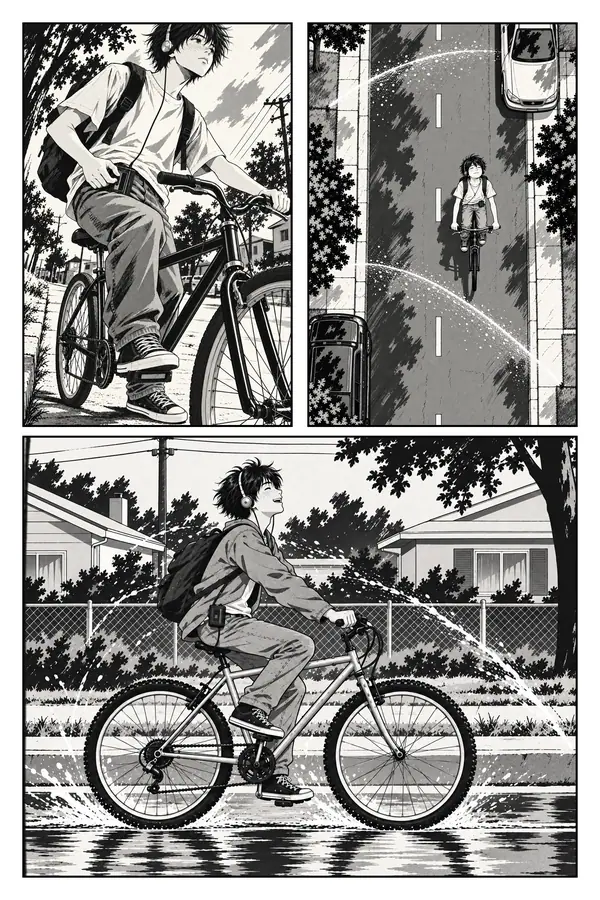




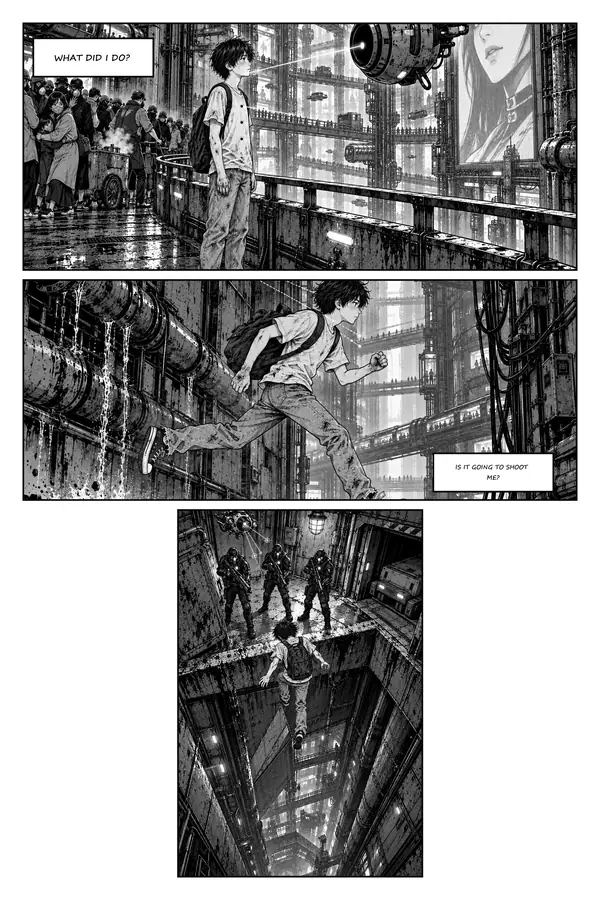

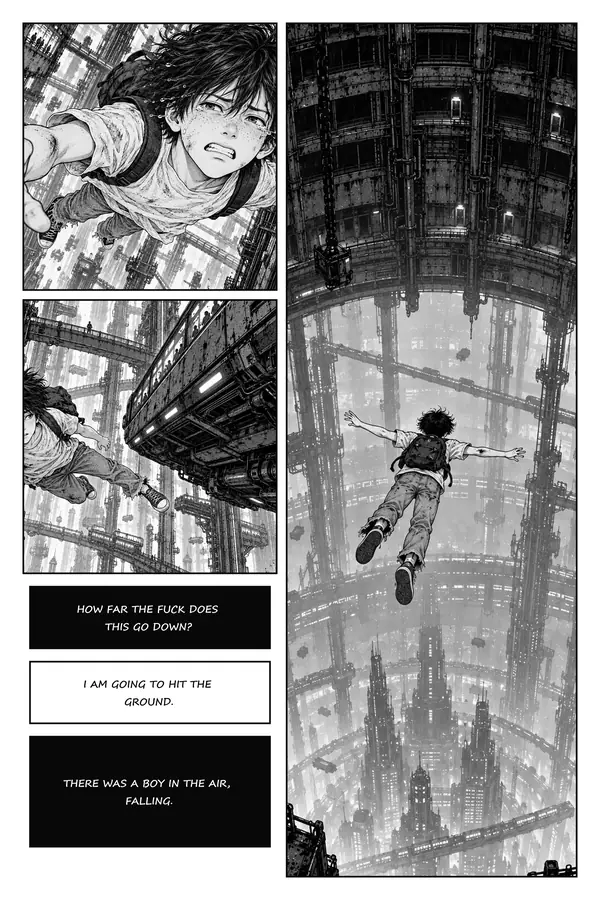
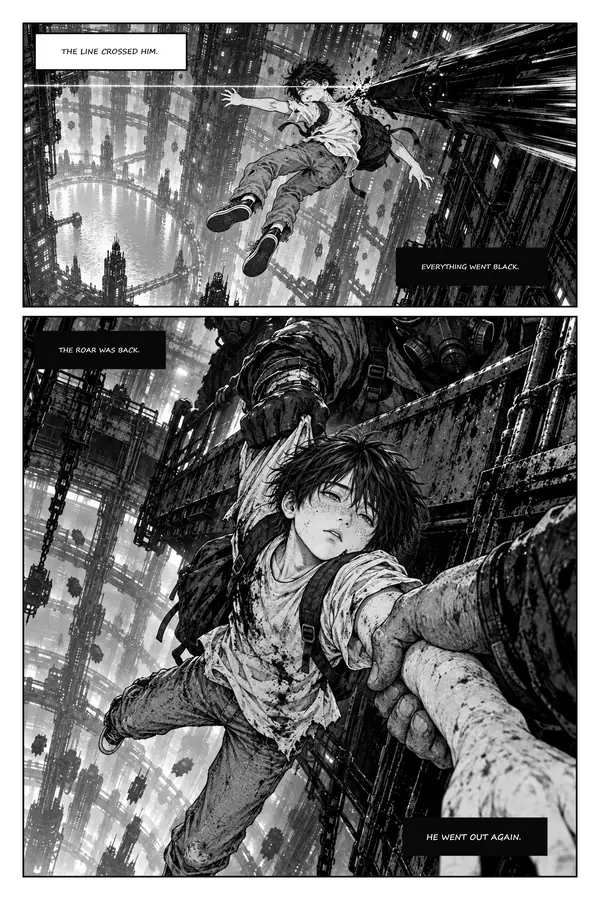


Read the chapters, then see the scenes again as graphic novel pages, in the same book.
GRAPHIC NOVEL PAGES
INSIDE EPISODE 1
Nothing you love should ever be lost.
Ad Kôrun writes it across every tower, and means it. Every citizen wears a chip behind the ear, and every face and every voice is kept.
A man goes to his night shift and does not come home. On the third morning, a notice from the state thanks his wife for her patience and bills her for his transition. She picks up his Kōra, a slim cylinder of black glass, and says his name. His face rises out of the glass, smiling.
“Hey, hon. What’s up?”
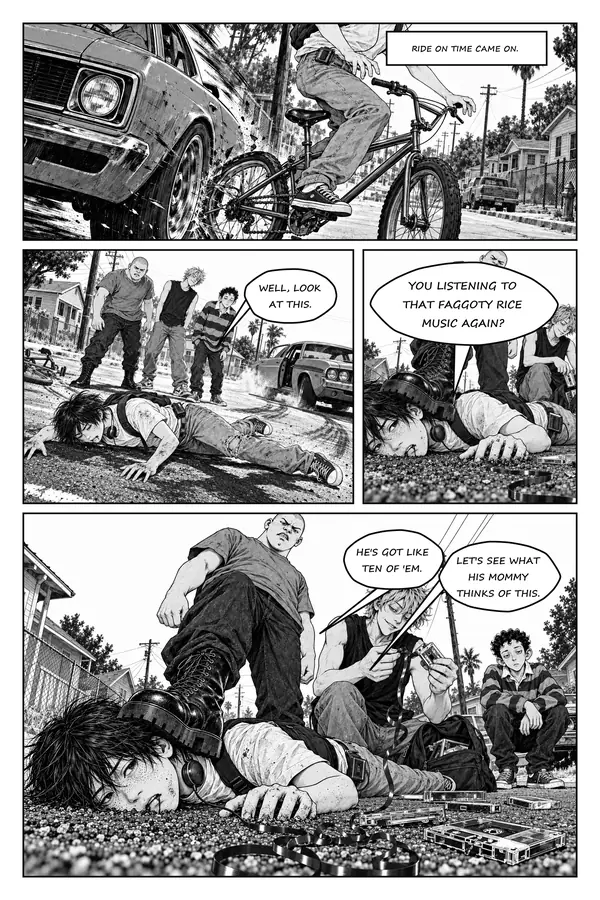
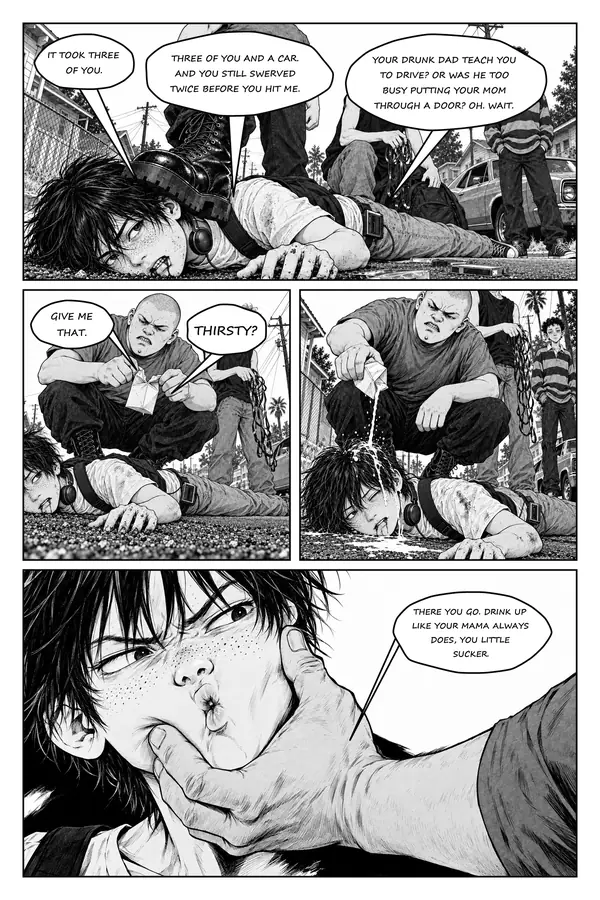
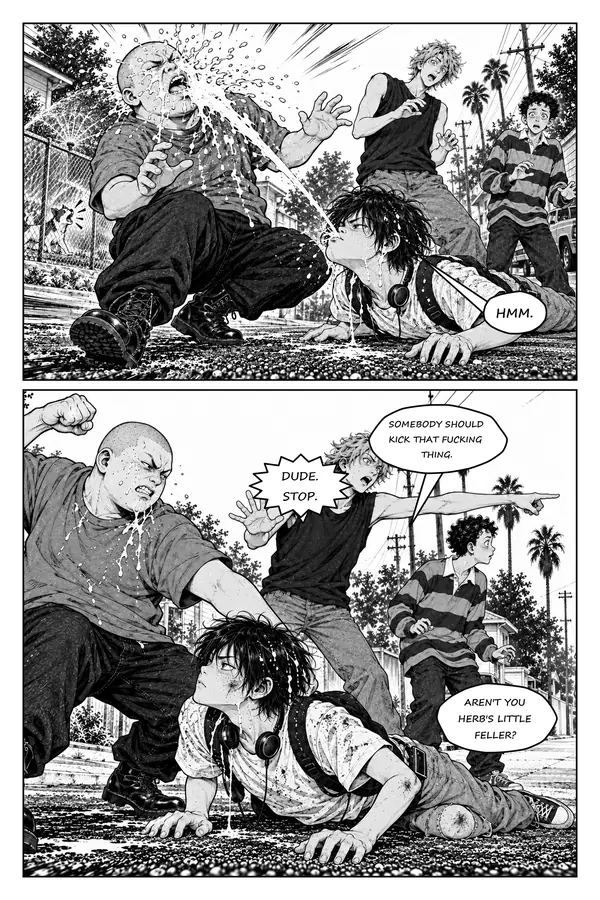
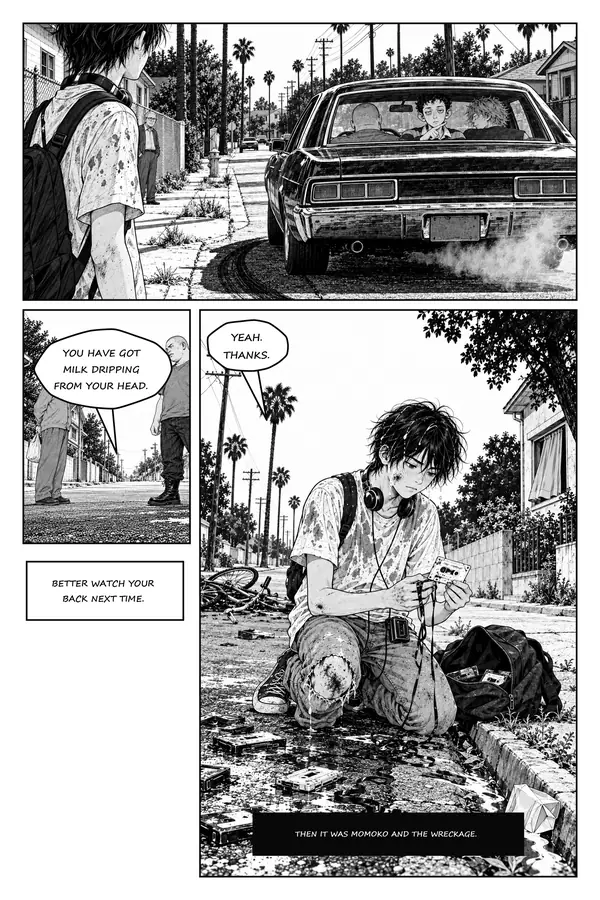
Milwaukee, 1992. Momoko has just turned thirteen, and the whole summer stands open like a door. His mother is singing in Japanese at the kitchen sink when she asks him to get milk. He rides off on his bike with Tatsuro Yamashita in his headphones. On the ride back, three older boys pin him to the asphalt, a boot on his cheek, the milk running down his face, his mother’s tapes cracking on the road.
“It took three of you,” Momoko says.
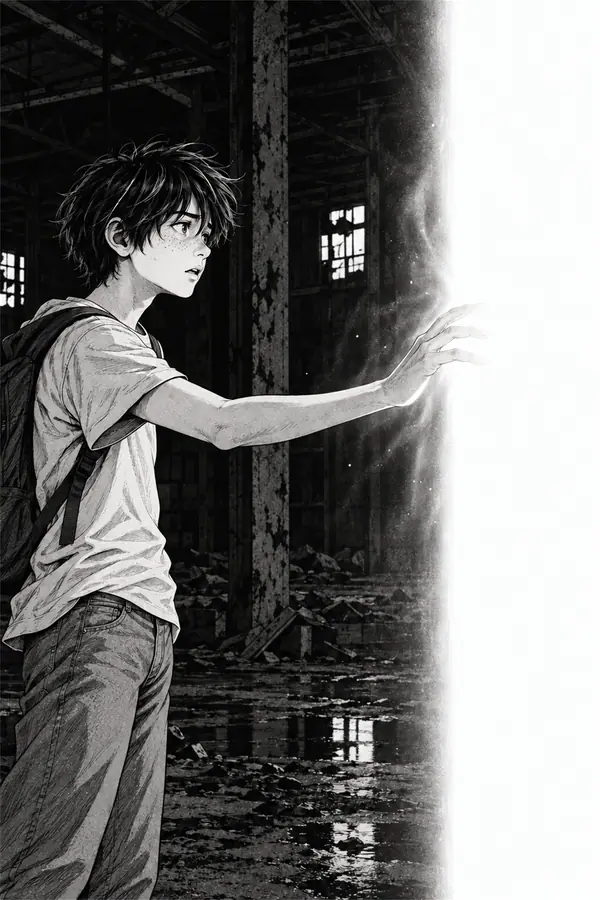
He does not go home. Instead he follows a hum to the dead warehouses, where a line of white light runs from the floor to the roof. He tosses a bolt into the light and listens for it to land.
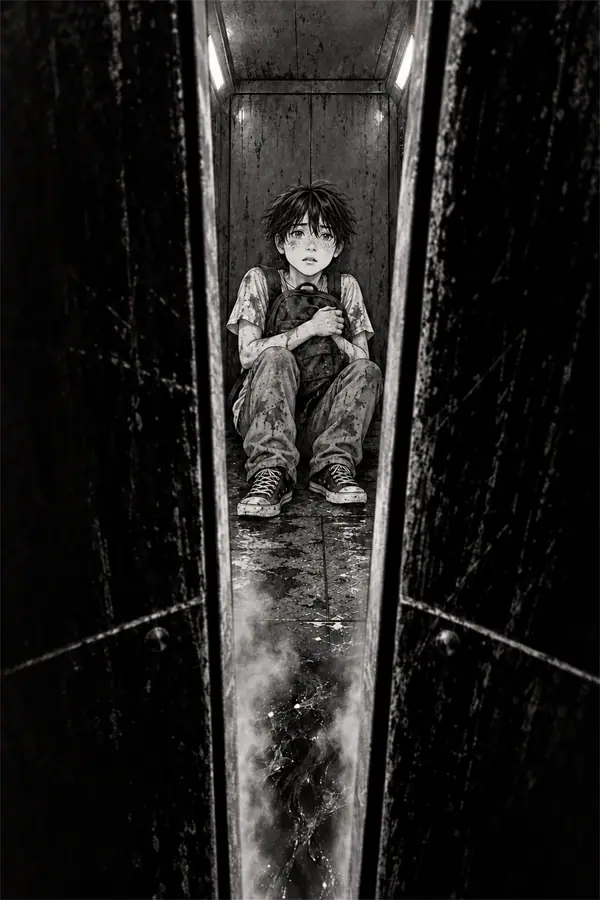
It is dark when he wakes, at the bottom of Ad Kôrun, with blood on his cheek, what is left of his mother’s tapes in his backpack, and nothing behind his ear.
Milwaukee, 1992. Momoko rides out to get milk for his mother and wakes in the dark at the bottom of Ad Kôrun, where every citizen wears a chip behind the ear and every voice is kept. He has no chip, and his mother is still waiting for the milk.
Arrival
Coming 14 November 2026
Follow the release linktr.ee/thegreatrevolt
Talk about it chapter by chapter with the people reading alongside you.
Join the Discord